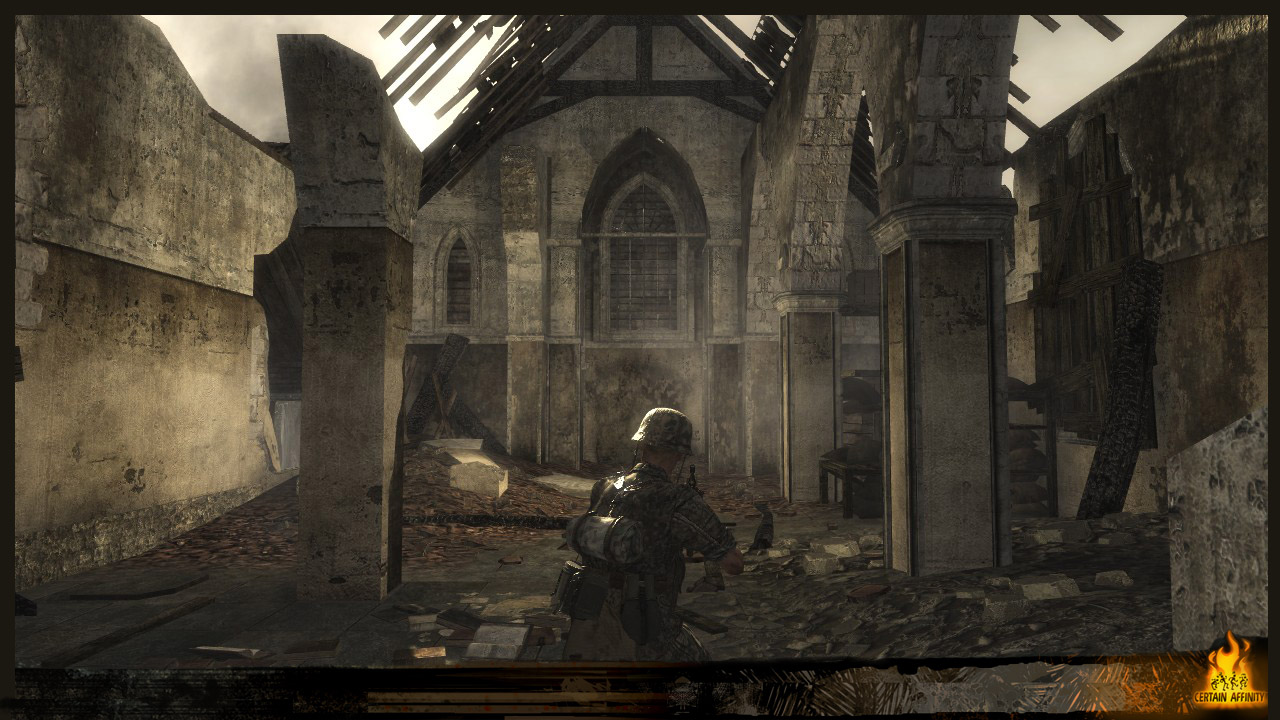
It's Friday, the day when new movies hit the movie theatres and the film world hopes like hell that all of us will scurry to the box office and buy tickets for the week's releases. The news this Friday is that all the theatres with James Cameron's Avatar are full. There were 700 prints of Avatar released throughout India and, in case you were wondering, that's a staggeringly high figure. Aside from the English version, there's Avatar in Tamil, Telugu and a bunch of Indian languages so making it the biggest Hollywood release in India so far. It's a big deal, and not just because of the amount of money spent on Avatar and how Fox must be desperate to recover the $ 230 million (nope, no typos there) that the madman Cameron has spent making this movie. (Though, if this New Yorker profile is anything to go by, then the suffering inflicted by Cameron upon Fox is more than financial. At some point in the making of the movie, Cameron had a message for the Fox executive via one of the producers, "Tell your friend he's getting fucked in the ass, and if he would stop squirming it wouldn't hurt so much. ") What is significant, though, is that Fox is clearly looking at India to supply some noticeable percentage of the earnings from Avatar.
Dileep Rao shows up briefly in this clip from Avatar, James Cameron’s high-tech yet Luddite tale of a soldier going native. The story evokes some obvious parallels like the European colonization of the New World. Cameron reportedly paid close attention to fashioning a bow-and-arrow culture which rides steeds bareback going up against white men with ships and guns.
The Na’vi are purely fictional, the tale a Star Wars-like saga with visuals Cameron self-deprecatingly revers to as ‘fantasy van art.’ But the story of a white guy ‘going native,’ becoming the tribe’s leader and doing battle with the West sounds a whole lot like The Last Samurai, in which Tom Cruise taught the emperor of Japan how to be a proper Japanese. Next they’ll do a yoga movie with Shia LaBeouf as Paramahansa Yogananda’s guru.
It’s a neat trick, this betrayal trope. You can have your cake and eat it too. You can show off the toys of a technically advanced culture while telling yourself the hero is a good guy in the end. Historically the turncoats would have been invaluable sources of enemy intelligence, not the new politicians in town. But in the movies, it’s never played that way. East of the date line, the white guy leads the nation, gets the girl and teaches Eskimos about snow. West of it, all white characters are villains or buffoons and Jackie Shroff just happens to be police chief, even in Korea.
If Avatar does well, maybe a blue-skinned Krishna epic will get funded here. I hear Carlos Mencía is available.
This has to be the best invite of the year. Jenny Bhatt doesn't just want people to come to her exhibition of paintings, she wants them to achieve "liberation thru' consumption", which is why the invite for her show is a credit card.
"Dear Seeker,
As part of our dedicated effort to take care of the spiritual needs of our friends, we are delighted to gift you the most invaluable of possessions — an exclusive Moksha Shots Credit Card! With this card you have the special privileges of unlimited shopping for a lifetime! You can now transfer credit onto your next life and in Easy Lifetime Installments. And while you continue to shop, you collect Karmic Brownie Points that you can use to avail of exciting gifts like Mind Flights, Out of Body Vacations, Virtual Artworks and more."
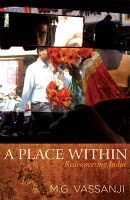
MG Vassanji's A Place Within (Penguin in India, Random House in Canada) was a brilliant meditation on history, religious identity, and Indianness by a novelist turning the questions of his fiction upon his own life and traditions. A member of an old, syncretistic faith, the Ismaili Khojas, Vassanji (who was born in Africa and later migrated to Canada) returns to the Gujarat of his ancestors and to the many Delhis to history to think about where he stands on some of the most vexing issues of our time. “It is always instructive,” writes Vassanji at one point on his travels, “to remind oneself of the obvious fact: The boundaries and names of many places are only recent in origin and often hide richer, more complex truths than one might imagine; the past then becomes inconvenient and slippery, far less easy to generalise.” And in a more personal mode, confessing to an inability to feel the belief of the true believer but also the skepticism of the agnostic: “At any dargah, a shrine of this kind, and even at a temple before a priest, I cannot but help but allow in me a solemn feeling, some respect and humility, for I stand alongside others in a symbolic place that it some manner reflects human existence and frailty, or smallness and exaltedness, and our striving for understanding.” To my mind this is the best Indian travel book of this decade.
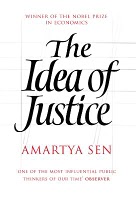
Amartya Sen's The Idea of Justice (Penguin in India and the UK, Harvard University Press in America) was, at one level, a highly technical and specialised work grappling with key questions in the theorisation of justice, most notably the landmark work by John Rawls on the same subject. But Sen's book also offered, to any intelligent lay reader interested in being led out of his comfort zone by a very astute tour guide, page upon page of brilliant thinking on both the plural nature of what we think of as "just" or "fair", while simultaneously insisting that these ideas be rigorously tested in the practical domain of "redressable injustice" instead of only aspiring to a theoretical, almost mathematical, beauty. Sen contests many ideas that have acquired a general currency in the world today, arguing here against rational choice theory and its "remarkably miniaturised view of human rationality", there against "the propensity [of theories] to account for all appearances from as few principles as possible", and holding a candle for "the plurality of reasons that a theory of justice has to accommodate." "Reasoning is central to the understanding of justice even in a world which contains much 'unreason'," Sen writes. "Indeed, it may be particularly important in such a world." The use of that understated and yet somehow reproving phrase "may be", which actually leaves the reader filling in a stronger word, offers a clue about what it is about Sen's style that makes his work so persuasive.
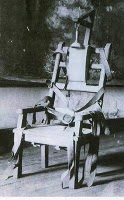
Reading about the death of the hangman Nata Mallick – and the fact that West Bengal doesn’t yet have anyone to replace him (or anyone who wants to replace him?) – I was reminded of a short story I used to love: Stanley Ellin’s “The Question” (a.k.a. "The Question My Son Asked"), which is anthologised in one of the many horror/suspense collections I devoured as a child.
Set sometime in the 1950s or 1960s, this is a tale told in the first person by a state executioner – the man who pulls the switch for the electric chair. At first he appears a bit defensive about the real nature of his profession – his insistence on calling himself an “electrocutioner” seems like a subterfuge – but then we see that he’s really quite proud of what he does. He doesn’t have much time for the anti-capital punishment position, which he feels comes from people psychoanalyzing things too much, creating complexities where there are none – to the extent of claiming that there is no such thing as a criminal at all, only “sick people” who can be cured. Our narrator, on the other hand, believes that when someone commits murder or rape he is no longer in the human race, and he has to be exterminated the way any dangerous wild animal would be. A jury finds this person guilty, a respected judge sentences him to the chair, most people approve of the verdict … and then someone has to be found to do the actual dirty work – to pull the switch. Why should this person become a social outcast when he’s merely acting as society’s instrument?
Journalist Anup Kaphle embedded with British troops in Afghanistan and got this fantastic footage of Gurkhas bonding with Afghans over Bollywood and Urdu:
[Did this piece for M magazine’s section on what the word “luxury” means to different people in an intimate, personal sense]
I have a friend who works for a bank in London. He’s doing well for himself but he thinks of his job as a necessary evil, something that must be survived for 10 hours each day while he tries to make time on the side for the things he really likes doing. His real passion, going back to our school days, is acting, and when I last met him he had just returned from a weekend trip to Ireland, to play a role in a short experimental film directed by a former classmate.
He loved the experience and couldn’t stop talking about it. “I wish I had the luxury of traveling to Dublin to be with those guys every week, he said, “or even just participating in three or four shows of a theatre performance in London each month. But it isn’t easy to juggle this along with the other stuff.” Looking at his eyes, I could see that the strain of the weekend was making itself felt. We parted after an early dinner; he was very tired and he needed to be at the bank – for “the other stuff” – at 9 AM.
It probably says something about the life I lead that such encounters come as minor jolts. At risk of causing serious annoyance, let me tell you something about myself: for the past seven years, my “work” has largely consisted of reading books, watching movies, and writing about them – all activities that I enjoy. There have, of course, been many commissioned assignments – which means often having to plough through less-than-engaging material – but after I established myself on my beat it became easier to pick and choose. Thus spoilt, I have to be regularly reminded of one of the most basic facts of human existence: that most working people in the world keep their professional and personal lives in separate, airtight boxes, and baulk when the two things chance to overlap; that they meticulously plan their weekends and weekday evenings (assuming they aren’t working late nights) and feel a bitter sense of loss if they don’t succeed in squeezing maximum utility from those precious pockets of “leisure time”.
Four years ago, I made another important career decision (with the help of a generous retainership offer from the newspaper I was employed with) and began working out of home, on my own time. Freelance writing may not be as lucrative as many other professions, but I rarely have to spend on books any more, and that’s where most of my money went in my pre-journalism days. It also means freedom from the ball-and-chain routine, freedom from neat and sterile office routines that make little sense to the writing life (what if the Muse goes AWOL between 9AM and 6 PM and comes calling at midnight instead?). It means being able to avoid the stress and the time-wastage associated with being stuck in Delhi traffic for over two hours each day.
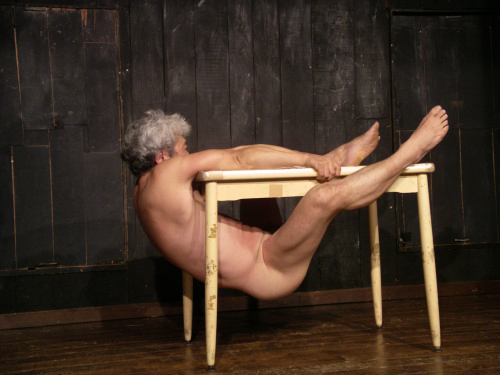
A few days ago, someone gave me a weighing scale for free. I summoned all my courage, stood on it and vowed to never do anything quite as self-esteem shattering ever again. When I told a friend of mine, she suggested I try Pilates. Watching a video of a Seiji Shimoda performance today, I figured I should take her advice. Whether or not I lose weight, I could always set up an alternative career as a performance artist.
Performance art has a bad rep for being obscure, self-indulgent, a touch ridiculous and basically very, very weird. Because why on earth does a man put a banana on the floor, get down on his hand and knees, rest his head on said floor and then huff and puff at the banana as though he's related to the wolf from the story of the Three Little Pigs? What point is made when a man wraps his head in pink wrapping paper and does a curious version of musical chairs? When a man carries a bucket around, asks the audience to spit into it and then upturns the same bucket on his head, what is communicated other than "get this man shampooed immediately"? What is artistic about laying out a line of watermelon wedges, squashing them underfoot and then extracting the juice from the floor with a syringe? The only one I understood was a chilling one in which a man and his young son sit face to face and eat chips. Unexpectedly, from time to time, the father slaps himself and the kid follows suit. It was a somewhat frightening look at farcical systems of reward and punishment, ideas of self-worth and continuing cycles of self-inflicted violence. Shimoda didn't do the self-slapping, watermelon-squelching and saliva hairpack. These were performances by artists who Shimoda has presented at festivals he's organised and in which he's participated. One of his performances that he showed had him doing some serious Pilates moves on a table, naked (naturally).
Reading this news item about the possibilities of “laboratory-grown meat” got me thinking about the two or three times in my life I’ve flirted with vegetarianism. As a child, after seeing a struggling chicken being carried to its doom through a lane behind a butcher's shop, I stopped eating meat for around 10 days. As an adult I've resisted the temptation to convert, having accepted one of the key hypocrisies of my life: that my very strong feelings about cruelty to animals (“animals” in this case being mainly cats, dogs and caged birds) are thoroughly incompatible with my eating choices. If or when I do turn vegetarian for good, it’ll probably be for health reasons (and with a sense that I’ve been the victim of a terrible injustice).
There have been a few times when I lazily considered converting for ethical or visceral reasons. One was after I read Eric Schlosser's description of the beef-making process in “Cogs in the Great Machine” (a chapter excerpt from Fast Food Nation). More recently, while watching Georges Franju's 1949 documentary Le Sang des bêtes (Blood of the Beasts), an almost unbearably impassive look at what goes on inside the slaughterhouses of Paris.
Ok, it doesn't matter how much you dislike Jhumpa Lahiri's writing, how can you not fall in love with her dad making pulao? Personally, I'm not entirely convinced about either the recipe (no black peppercorns, really?) or Amar Lahiri's assertion that it's not buttery, but as a wise person said, "It's hard to go wildly wrong with an entire stick of butter and some harmless spices." Listening to Amar Lahiri talk his way through the recipe was rather sweetly nostalgic. It reminded me of my father who will always say chocOlate (chocolate) and obhAr (over). He, of course, managed to burn an egg in an attempt to boil it so there are going to be no videos of him making pulao. My mother is a seriously good cook though. In fact, I think I survived schools in foreign countries mostly because while other kids wanted to beat me up, they wanted the lunch she packed me more. It never made sense to her that I wanted about 10 rotis and copious amounts of aloo jeera since I showed no interest in the same food when she gave it to me at home. But she gamely stuffed my lunch box and that gave me some amount of immunity from lunchroom bullies. Trip me up and I spill the aloo jeera, which means Bully nos. 1,2, 3, and 4 will have to stick to the crummy sandwiches their mums packed them. So I'd hand over my lunch box and scram. They'd tuck in. Meanwhile, I'd buy those horrible, rubbery, soya-sauce-sticky chicken wings from the cafeteria and ogle at the hawker-stall chicken rice that Nikki from New Zealand (whose mother couldn't be bothered to cook lunch) brought every other day.
Somewhere near the last part of "Leaving India", Minal Hajratwala talks about Indian-origin kids in America who steered clear of the kitchen before going to school so they wouldn't smell of "curry". It's a fantastic image: a girl dressed in whatever is cool at the time - leggings? Sweater in a single colour that hasn't been knitted by gran? - inching her way out, desperate to not carry a whiff of India on her. It's such a futile exercise because, whether or not she smelt of curry, she was still going to be brown and thanks to that colour, she was still going to carry what Hajratwala calls "a history of skin". No matter what she wore or how far she stayed from the kitchen, those who had to smell curry on her would smell it anyway.
The lurid Meredith Kercher murder case ended in convictions for Amanda Knox and boyfriend Raffaele Sollecito yesterday. Kercher’s mother is Indian, married to an English reporter for the tabloids. Knox, a UW exchange student studying in the small Italian town of Perugia, was convicted of inciting the rape of her flatmate and cutting her throat. The case stands out for the garish details of the crime, the gender of the main accused and the fact that it was the American rather than the Briton as the hard-partying lout inflaming town-gown tensions.
A couple of aspects of this case are interesting beyond the tawdry nature of the crime. Kercher and Knox reportedly clashed over their very different habits. Kercher was studious and quiet and objected to Knox bringing home random men and pot dealers, among other things. Is there a cultural angle to this? Was Kercher outwardly conservative in part because her mother is desi? It’s unclear.
… in his final address, [the prosecutor] laid the emphasis on Knox’s supposed hatred of her flatmate, whom she allegedly regarded as an insufferable prig - something Knox fiercely denied. [Guardian]
The two main families involved took diametrically opposite approaches to the investigation. The Kerchers made a couple of comments when it first broke and then fell silent, letting the case proceed through Italian courts. The Knoxes hired a PR agency to work the refs, complaining the prosecutor was acting in bad faith.
The coverage of the case was shot through with knee-jerk nationalism. British papers generally assumed Knox was guilty, the Seattle Times was highly sympathetic to Knox, while the papers in publicly conservative, Catholic Italy, demonized Knox for her lifestyle and callous behavior after the murder. After the verdict, an online commenter noted that the U.S. hates the idea of an American being convicted in a foreign court. Washington Sen. Maria Cantwell issued a statement threatening to take up the verdict with the ambassador to Italy. Italian commenters, for their part, stewed about the Marine pilots who killed 20 at an Italian ski resort being given a slap on the wrist by American courts.
Few of the commenters focused on the evidence. The forensic evidence, including a murder weapon with Knox’ DNA on the handle and Kercher’s on the blade, didn’t have a clean chain of custody. But the circumstantial evidence was damning. Knox claimed she came home the night of the murder, noticed a broken window and blood on the floor and simply took a shower. Early the next morning Sollecito rose early and bought bleach; the flat was later found to have been cleansed blood. The two never called police until after the cops turned up in the afternoon on their own, investigating why Kercher’s mobile phones were lying in the garden next door.




 Email this
›
Email this
›  Tweet this
›
Tweet this
›  Facebook this
›
Facebook this
›  Reddit this
› Link
Reddit this
› Link 




 Loading...